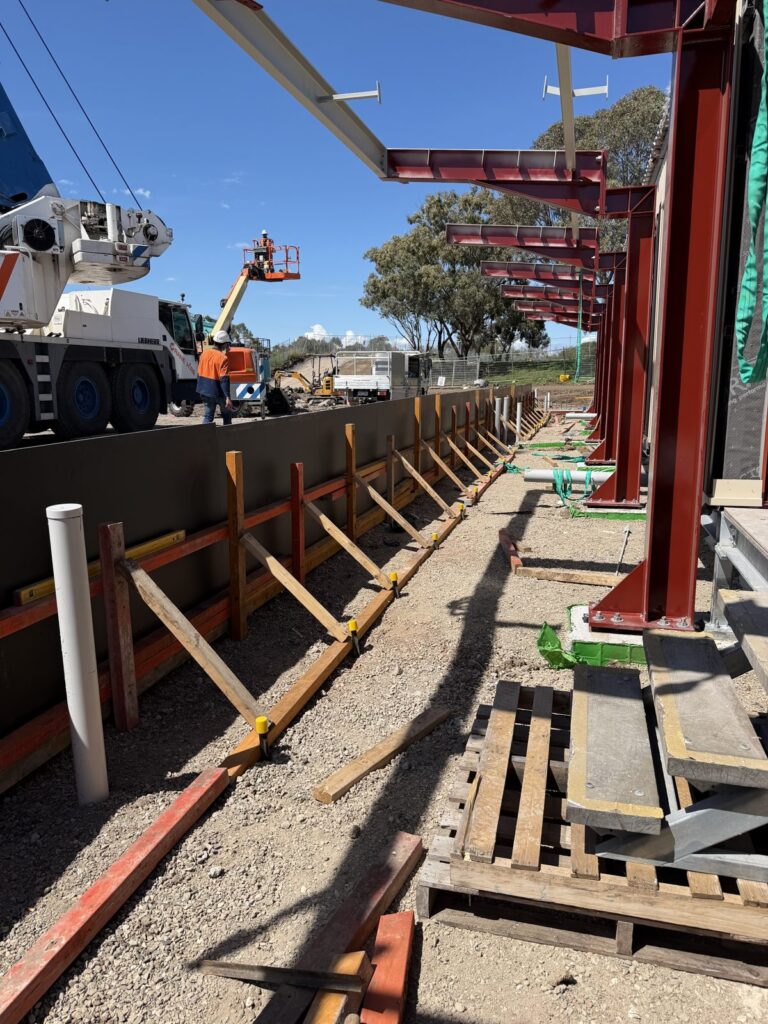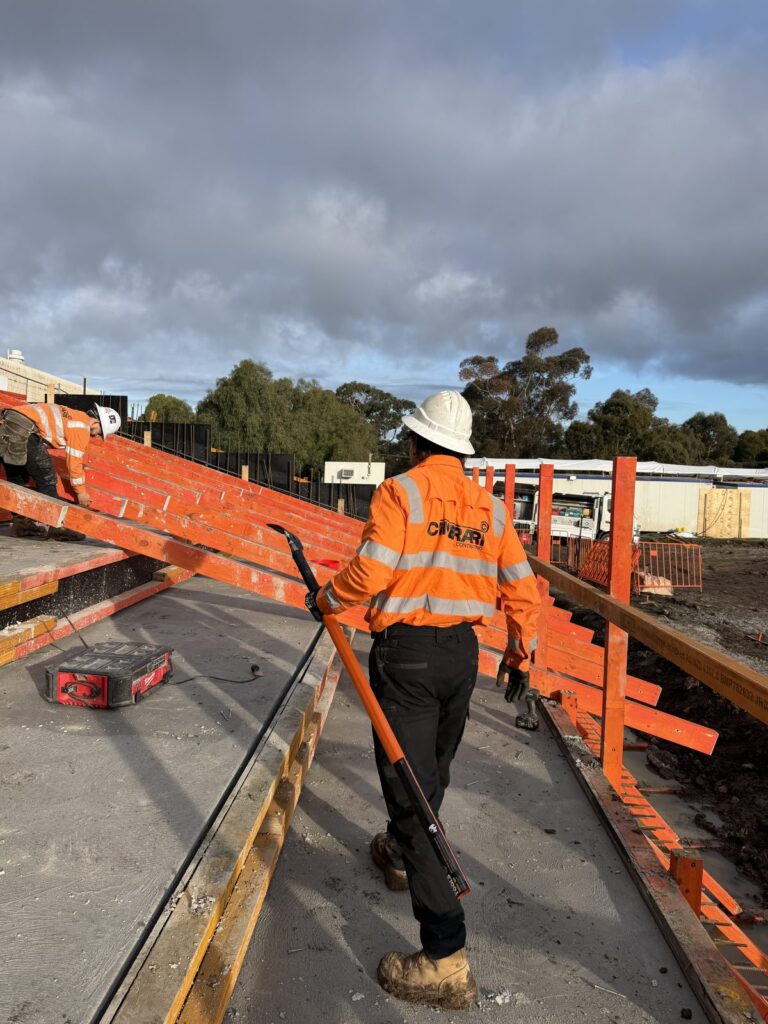

Construction site hoarding protects the public at the edge of a site, and it has to be designed, approved and checked like any other structure. It is different from temporary fencing, which mainly controls who can walk onto the site. When a hoarding fails, the people in danger are the ones walking past.
This guide explains how hoardings differ from fencing, what WorkSafe Victoria says about design and checking, and how councils handle consent under Regulation 116. We have not quoted any City of Melbourne rules, because we could not open those pages. Always check with your relevant building surveyor and council.
Related reading
- Our service: Site Establishment Works
- Our service page: Site Establishment Melbourne
- Related guide: Temporary Fencing for Melbourne Construction Sites
- Related guide: Site Establishment: A Checklist for Builders in Victoria
Construction Site Hoarding vs Temporary Fencing
WorkSafe Victoria lists site sheds, awnings, hoardings, site fences and signage as temporary site structures.[2] They all carry risk, but a hoarding does a different job to a perimeter fence. WorkSafe’s page on security fencing is about fencing that controls unauthorised entry, including by children, and it says such a fence should be at least 1.8 m high, difficult to climb and prevent access from underneath.[1] That page does not cover hoardings.
| Security fencing | Hoarding | |
|---|---|---|
| Main job | Controls unauthorised entry to an unoccupied site[1] | Protects the public at the site boundary, often over or beside a footpath[4][6] |
| Typical guidance | At least 1.8 m high, hard to climb, no gaps underneath[1] | Designed for the site, verified after erection[2] |
| Approval | Check for permits[2] | Council and building surveyor involvement under Regulation 116[4][6] |
Many sites have both. Treat each one as a structure that needs its own design and check.
Why Construction Site Hoarding Design Matters
WorkSafe Victoria warns that temporary site structures have the potential to cause death or serious injury to workers and the public.[2] They should be designed to resist potential severe weather conditions for the specific site location, and be freestanding unless a competent person has assessed the supporting structure and connection points.[2]
After erection, a competent person should inspect and verify in writing that the structure complies with the engineering design.[2] In July 2025, WorkSafe reported a hoarding collapse that damaged three parked vehicles and narrowly missed a pedestrian. The duty holder had failed to ensure the hoarding was designed by a qualified structural engineer, and had failed to review and revise its risk controls. WorkSafe’s headline says the fine was doubled to $50,000.[3]
Engineered
Design
A qualified structural engineer where required[3]
Site-specific
Weather
Designed for severe weather at the location[2]
In writing
Check
Verified after erection by a competent person[2]
Regulation 116 and Council Consent
Public protection at the edge of a site is dealt with under Regulation 116 of the Building Regulations 2018, which councils administer. We have not opened the regulation text, so we describe it as the councils do. Whitehorse City Council says that regulation requires protective measures, and lists erecting a hoarding, gantry or scaffold as one of them.[4] Council approval must also be obtained for precautions over the street alignment.[4]
| Council | What its page says |
|---|---|
| Whitehorse | Protective measures include a hoarding, gantry or scaffold. Consent is given only for a period fully covered by the public liability insurance, and structural engineers design and certify.[4] |
| Banyule | The council cannot issue a building permit unless it is satisfied consent has been obtained. Structural designs are needed for gantries, scaffolding and non-standard hoardings over the footpath. Applications are assessed within 4 weeks.[5] |
| Darebin | The relevant building surveyor decides precautions to protect the public and approves them before building works start, for example approving a type of hoarding.[6] |
The details differ by council, so treat this as a picture of how the process works and not a rule for your site.
Construction Site Hoarding and Asset Protection Permits
Hoardings are only part of protecting council assets. Whitehorse City Council’s asset protection permit has to be obtained at least seven days before the commencement of any building work, and it asks for public liability insurance of at least $20 million.[7] Other councils have their own timeframes and amounts.
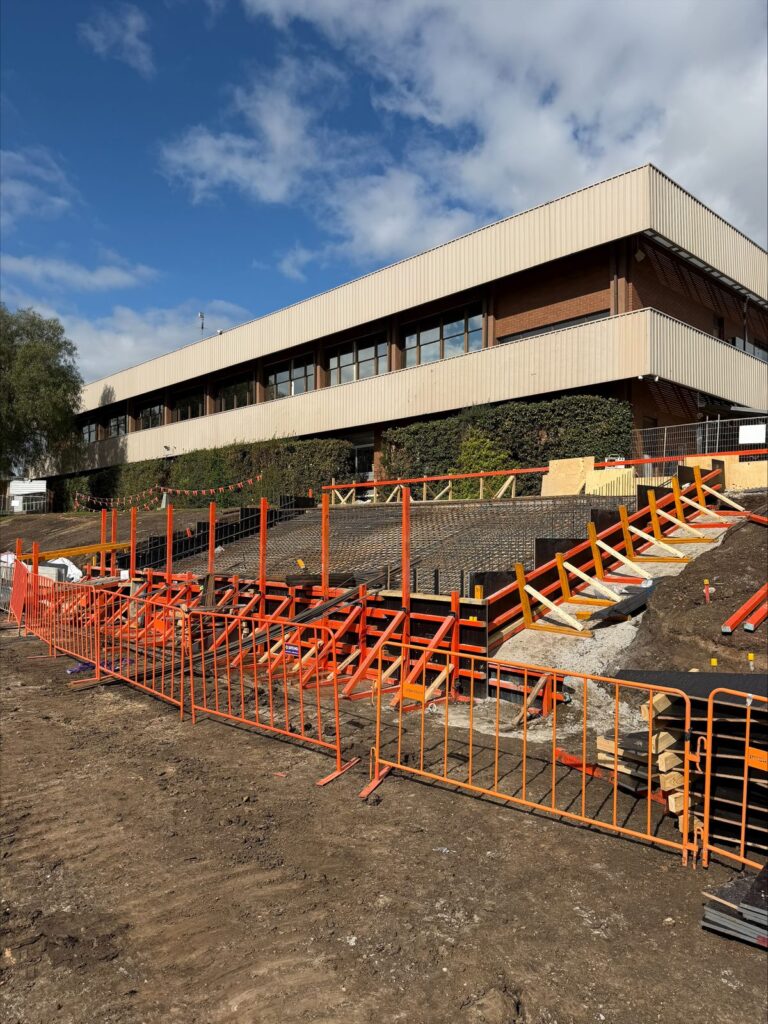
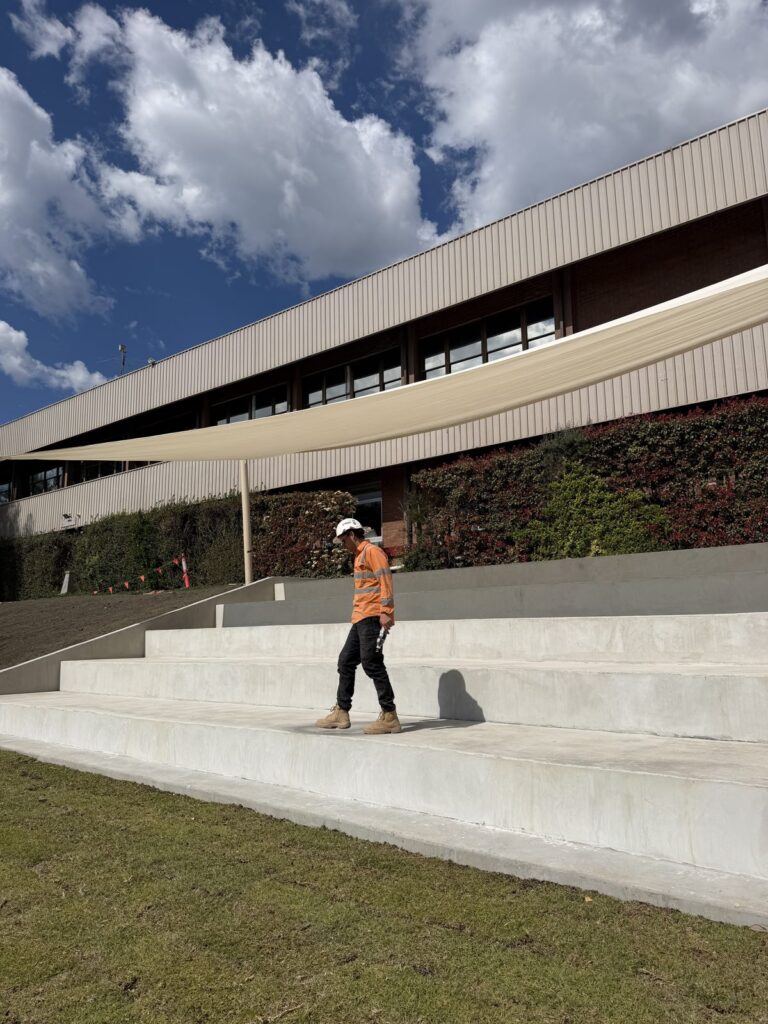
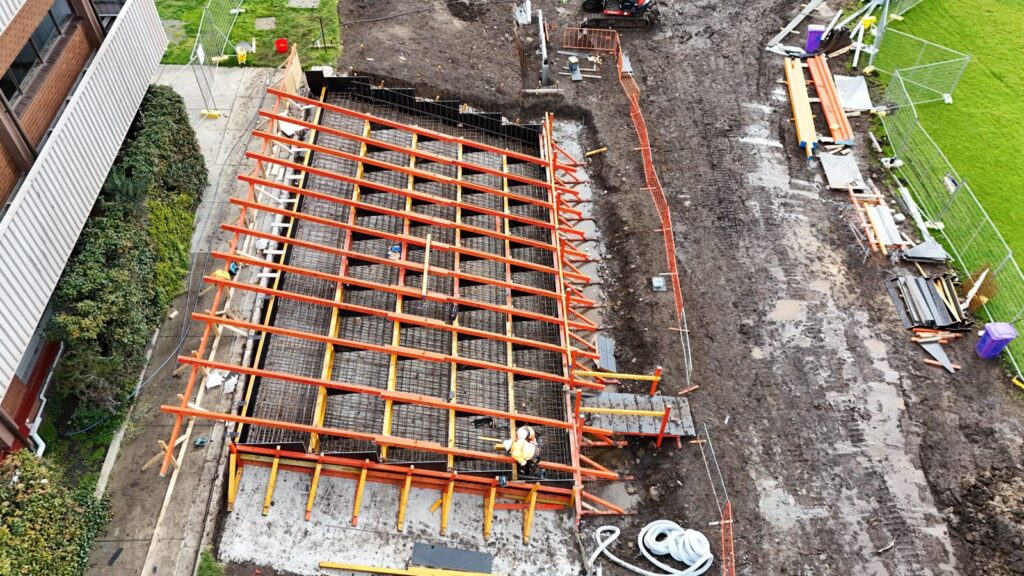
Temporary barrier fencing around a staged concrete structure on a Cinerari site.
★★★★★
“The team was punctual, professional, and very knowledgeable, making the whole process smooth and stress-free.”
nomar group · client review
A Construction Site Hoarding Checklist
Avoid
- Treating a hoarding like a fence
- Putting one up with no engineering design
- Skipping the written verification after erection
- Waiting until the week before work to ask about consent
Do
- Design by a qualified structural engineer where required[3]
- Designing for the site’s weather[2]
- A written check after erection[2]
- Asking the building surveyor and council early[4][5][6]
1
Ask the surveyor
Which public protection measures does the site need?[6]
2
Get the design
An engineer designs where required.[3][4]
3
Apply for consent
Allow time for council assessment.[5]
4
Verify and maintain
Check in writing after erection and review controls.[2][3]
Where We Fit In
We build site establishment works, including temporary fencing and concrete bases, to your site plan and your engineer’s details. Hoardings over a footpath are specialist structures that need their own design and consent, and we work with the designer and your building surveyor. We do not give approval advice. Construction site hoarding is a specialist structure, so we describe what we build and what we do not.
If your project needs site establishment works, send the site plan and the access and we will price what we can build and list what is included and what is not.
How We Work With You
1
Talk to us about your scope
Send site plan, access and programme.
2
Confirm plan and pricing
We review the documents and give clear pricing based on scope and site conditions.
3
Accurate delivery
Inspection hold points keep the work accurate, with photo records.
4
Clean handover
The work is ready for the next trade, with a tidy site and clear communication.
Get a Site Establishment Quote for Your Melbourne Project
Cinerari Contracting builds site establishment works for civil, industrial and commercial projects and selected residential works across Melbourne and regional Victoria. Send the drawings and site details, and we’ll price it.
What Is Construction Site Hoarding?
It is a temporary structure at the edge of a site that protects the public. WorkSafe Victoria lists hoardings among temporary site structures, alongside sheds, awnings, fences and signage.[2]
What Is the Difference Between a Hoarding and a Security Fence?
A security fence controls unauthorised entry and should be at least 1.8 m high.[1] A hoarding protects the public at the boundary and is designed and verified as a structure.[2][4]
Does a Hoarding Need an Engineer?
WorkSafe’s July 2025 case involved a failure to ensure the hoarding was designed by a qualified structural engineer, and council pages refer to engineer design and certification.[3][4]
Do I Need Council Consent for a Hoarding?
Councils administer Regulation 116 and give consent for public protection over the street alignment.[4][5] Check with your relevant building surveyor and council.
Who Decides What Protection Is Needed?
Darebin City Council says the relevant building surveyor decides precautions to protect the public and approves them before building works start.[6]
How Long Does Consent Take?
Banyule City Council says it assesses applications within 4 weeks.[5] Other councils differ.
More Concrete and Civil Guides
About the author
Luke Cinerari, Director, Cinerari Contracting
Luke leads Cinerari Contracting, a Melbourne civil and reinforced concrete subcontractor working with builders, developers and civil contractors across metropolitan Melbourne and regional Victoria. Cinerari builds retaining walls, footings, slabs, pits, culverts and site establishment works to the engineer’s drawings.
Phone: 0400 692 550 · Email: hello@cineraricontracting.com
Sources
- WorkSafe Victoria, Construction site security fencing
- WorkSafe Victoria, Temporary site structures (safety alert)
- WorkSafe Victoria, Fine doubled to $50,000 after hoarding collapse
- Whitehorse City Council, Report and Consent: Protection of the Public, Regulation 116
- Banyule City Council, Regulation 116 for public protection
- Darebin City Council, Precautions over street alignment
- Whitehorse City Council, Asset Protection Permits
Information in the concreting industry changes frequently. Requirements differ by council and by site, and linked content may change or become outdated. Please always contact us for help with your important building decisions.